Busy Beaver Explorer / holdouts / 1RB0LC_1LC0RE_1LD1LB_1LA1LD_1RF0RA_---1RE / explained
A 6-state Busy Beaver machine · Status as of 8 November 2026.Does this machine ever halt?
1RB0LC_1LC0RE_1LD1LB_1LA1LD_1RF0RA_---1RE
OpenNobody has proved whether this machine halts. Everything below is what is known so far.
Nobody knows. Each sweep of the head flips the repeating pattern of the tape into its complement; underneath, a list of blocks shrinks at fixed rates while a counter at the front doubles and feeds new blocks into the list.
6 states, two symbols, 1 halting transition
Each entry says what to write, which way to move and which state to enter. The machine starts in A on a blank tape (all 0s).
The machine stops when it is in F reading 0. F is entered only from E0 (writes 1, moves R): E>0 0. So a halt is the moment this pattern appears, with the head on the cell after >.
| state | reads 0 | reads 1 |
|---|---|---|
| A | 1 R B | 0 L C |
| B | 1 L C | 0 R E |
| C | 1 L D | 1 L B |
| D | 1 L A | 1 L D |
| E | 1 R F | 0 R A |
| F | halt | 1 R E |
read:write move. Red marks a halting transition. Hover a state or a row to single out its arrows.The tape from blank, step by step
This is the real machine, simulated in your browser. Step it, play it, or jump to a step count. Below the cells is the whole visited tape in the notation of the notes: 1^5 is five 1s, and C>0 is the head in state C on a 0.
(10)7 is the word 10 seven times in a row, and the orange tag is the head. The grouping is found afresh at every step by looking for the longest repeat of a word of up to 8 cells, so it shows the counts a machine keeps on its tape without anyone having to decode them first; it is a display, not a result.Space-time diagram and records
The diagram stacks the tape at many moments. Sampling at each new cell shows the shape of the run as the visited region grows; sampling evenly in time shows where the head spends its time. The records list every step at which the head reaches a cell no earlier step reached, with the side, the width so far and the whole tape: the first place to look for a repeating macro structure. Click a row of the diagram to send the simulator above to that step.
Complementing sweeps over a list
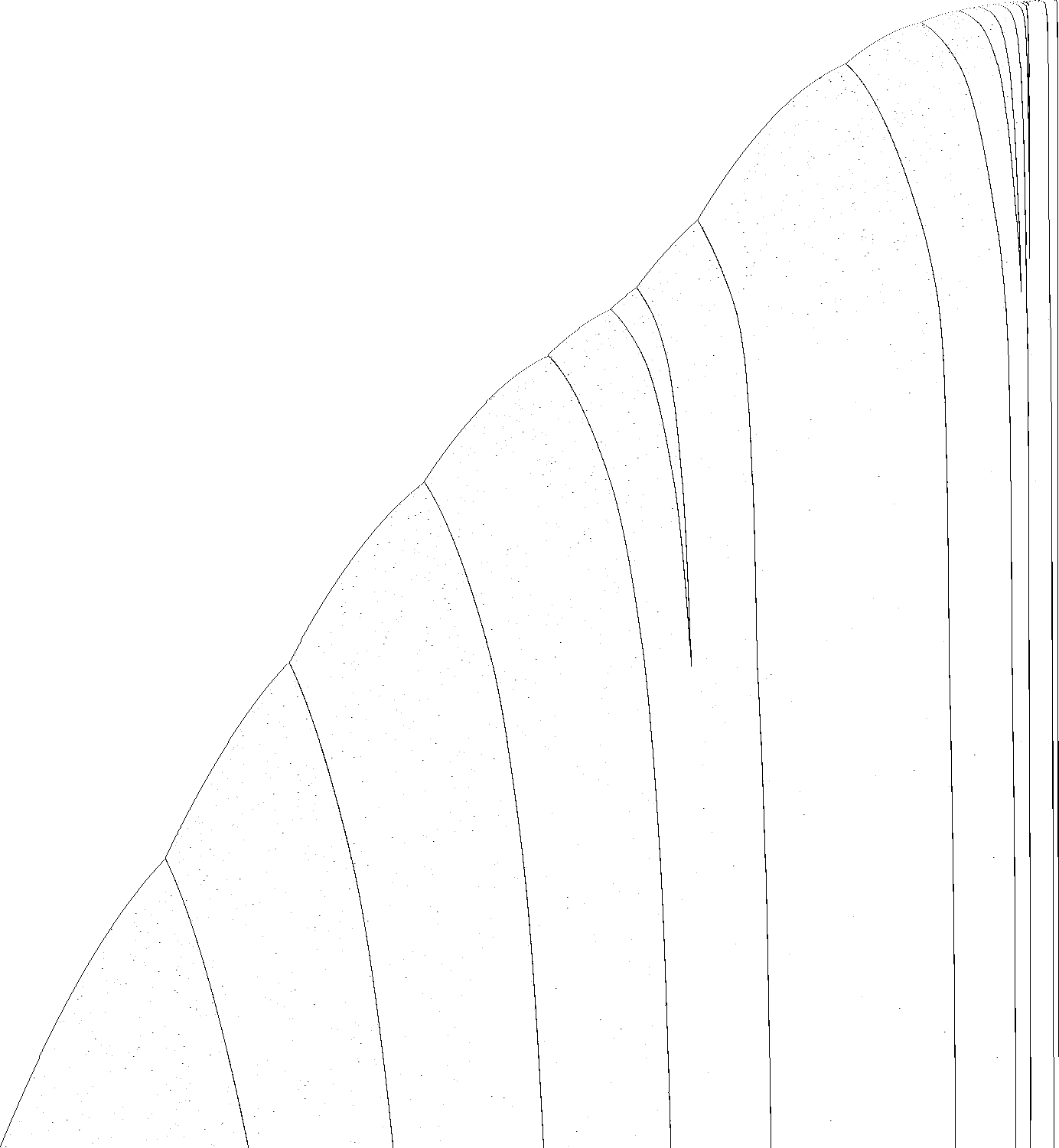
The background has period 3, and every pass of the head turns it into its complement: 010 becomes 101 going left and back again going right. Read at the moments the head is at the right end in state B, the tape is a list:
| step | front x | blocks (010)^a, separated by 11 | last |
|---|---|---|---|
| 7,715,674 | 77 | 467 1077 352 113 120 | 42 |
| 8,075,963 | 202 | 447 1065 348 109 120 | 40 |
| 8,571,490 | 245 | 163 427 1053 344 105 120 | 38 |
| 9,278,929 | 490 | 123 407 1041 340 101 120 | 36 |
The last block shrinks by 2 per visit, the block of 120 waits, the blocks before it shrink by 4 or 12 or more, and the front counter often doubles or drops by 5, pushing a new block into the list from time to time. How the front counter and the new blocks are tied together is the next thing to work out.
The shape of the run
Left of the start, the visited part of the tape grows like the square root of the step count, the signature of a head sweeping back and forth across the whole tape and adding a cell or a few at the end of each sweep (a bouncer-like shape) (fitted exponent 0.463). Right of the start it grows like the logarithm of the step count: each new cell costs a roughly constant factor more time, the signature of a counter or of a Collatz-like map whose values are written on the tape (fitted exponent 0.047).
After 109 steps the tape spans 83,871 cells (62,156 left of the start, 67 right), with a density of 1s of 0.366.
The tape (run-length coded, 1^5 is five 1s, C>0 the head in state C on a 0) at some of the last moments the head reached a new cell, cut to 400 characters:
| side | step | tape |
|---|---|---|
| left | 954,422,648 | C>0 0 1^2 0 1^2 0 1^2 0 1^2 0 1^2 0 1^2 0 1^2 0 1^2 0 1^2 0 1^2 0 1^2 0 1^2 0 1^2 0 1^2 0 1^2 0 1^2 0 1^2 0 1^2 0 1^2 0 1^2 0 1^2 0 1^2 0 1^2 0 1^2 0 1^2 0 1^2 0 1^2 0 1^2 0 1^2 0 1^2 0 1^2 0 1^2 0 1^2 0 1^2 0 1^2 0 1^2 0 1^2 0 1^2 0 1^2 0 1^2 0 1^2 0 1^2 0 1^2 0 1^2 0 1^2 0 1^2 0 1^2 0 1^2 0 1^2 0 1^2 0 1^2 0 1^2 0 1^2 0 1^2 0 1^2 0 1^2 0 1^2 0 1^2 0 1^2 0 1^2 0 1^2 0 1^2 0 1^2 0 1^2 0 1^2 0 1^2 |
| left | 970,147,139 | C>0 0 1^2 0 1^2 0 1^2 0 1^2 0 1^2 0 1^2 0 1^2 0 1^2 0 1^2 0 1^2 0 1^2 0 1^2 0 1^2 0 1^2 0 1^2 0 1^2 0 1^2 0 1^2 0 1^2 0 1^2 0 1^2 0 1^2 0 1^2 0 1^2 0 1^2 0 1^2 0 1^2 0 1^2 0 1^2 0 1^2 0 1^2 0 1^2 0 1^2 0 1^2 0 1^2 0 1^2 0 1^2 0 1^2 0 1^2 0 1^2 0 1^2 0 1^2 0 1^2 0 1^2 0 1^2 0 1^2 0 1^2 0 1^2 0 1^2 0 1^2 0 1^2 0 1^2 0 1^2 0 1^2 0 1^2 0 1^2 0 1^2 0 1^2 0 1^2 0 1^2 0 1^2 0 1^2 0 1^2 0 1^2 0 1^2 0 1^2 |
| left | 985,891,449 | C>0 0 1^2 0 1^2 0 1^2 0 1^2 0 1^2 0 1^2 0 1^2 0 1^2 0 1^2 0 1^2 0 1^2 0 1^2 0 1^2 0 1^2 0 1^2 0 1^2 0 1^2 0 1^2 0 1^2 0 1^2 0 1^2 0 1^2 0 1^2 0 1^2 0 1^2 0 1^2 0 1^2 0 1^2 0 1^2 0 1^2 0 1^2 0 1^2 0 1^2 0 1^2 0 1^2 0 1^2 0 1^2 0 1^2 0 1^2 0 1^2 0 1^2 0 1^2 0 1^2 0 1^2 0 1^2 0 1^2 0 1^2 0 1^2 0 1^2 0 1^2 0 1^2 0 1^2 0 1^2 0 1^2 0 1^2 0 1^2 0 1^2 0 1^2 0 1^2 0 1^2 0 1^2 0 1^2 0 1^2 0 1^2 0 1^2 0 1^2 |
| right | 526,094,341 | 1 0^2 1 0^2 1 0^2 1 0^2 1 0^2 1 0^2 1 0^2 1 0^2 1 0^2 1 0^2 1 0^2 1 0^2 1 0^2 1 0^2 1 0^2 1 0^2 1 0^2 1 0^2 1 0^2 1 0^2 1 0^2 1 0^2 1 0^2 1 0^2 1 0^2 1 0^2 1 0^2 1 0^2 1 0^2 1 0^2 1 0^2 1 0^2 1 0^2 1 0^2 1 0^2 1 0^2 1 0^2 1 0^2 1 0^2 1 0^2 1 0^2 1 0^2 1 0^2 1 0^2 1 0^2 1 0^2 1 0^2 1 0^2 1 0^2 1 0^2 1 0^2 1 0^2 1 0^2 1 0^2 1 0^2 1 0^2 1 0^2 1 0^2 1 0^2 1 0^2 1 0^2 1 0^2 1 0^2 1 0^2 1 0^2 1 0^2 1 0 |
| right | 801,946,038 | 1 0^2 1 0^2 1 0^2 1 0^2 1 0^2 1 0^2 1 0^2 1 0^2 1 0^2 1 0^2 1 0^2 1 0^2 1 0^2 1 0^2 1 0^2 1 0^2 1 0^2 1 0^2 1 0^2 1 0^2 1 0^2 1 0^2 1 0^2 1 0^2 1 0^2 1 0^2 1 0^2 1 0^2 1 0^2 1 0^2 1 0^2 1 0^2 1 0^2 1 0^2 1 0^2 1 0^2 1 0^2 1 0^2 1 0^2 1 0^2 1 0^2 1 0^2 1 0^2 1 0^2 1 0^2 1 0^2 1 0^2 1 0^2 1 0^2 1 0^2 1 0^2 1 0^2 1 0^2 1 0^2 1 0^2 1 0^2 1 0^2 1 0^2 1 0^2 1 0^2 1 0^2 1 0^2 1 0^2 1 0^2 1 0^2 1 0^2 1 0 |
These are measurements of one bounded run, sorted by tools/py/bbtools/triage.py; the macro structure behind them is the next thing to find.
This run next to a related machine
The two machines run for the same number of steps and are drawn the same way, a row each time the head reaches a new cell. Where the relation involves a mirror image, the second diagram is flipped left to right so that the two can be compared directly. Look for where the pictures agree and where they part: the text under each relation in the section on related machines says which of it is proved and which is only observed.
1RB0LC_1LC0RE_1LD1LB_1LA1LD_1RF0RA_---1RE (this machine)
Every result, by what it rests on
Status as of 8 November 2026. The same list as the proof-status page, built from the same file.
step_none_iff, lean/Blank.leanThe machine stops exactly when it reads the symbol of a halting transition (F0); the generated statement covers every configuration.
blank_runs_kernel, lean/Blank.leanThe list simulator of the shared library, proved to agree with the machine's semantics, runs 10,000 steps from blank tape without a halt, evaluated by Lean's kernel.
blank_runs_native, lean/Blank.leanThe same run, evaluated by compiled code.
holdouts/triage.jsonThe C simulator tools/c/triage.c runs 109 steps without a halt; at the end 83,871 cells have been visited and 30,719 of them hold a 1.
tools/py/bbtools/triage.pyLeft of the start, the visited part of the tape grows like the square root of the step count, the signature of a head sweeping back and forth across the whole tape and adding a cell or a few at the end of each sweep (a bouncer-like shape) (fitted exponent 0.463). Right of the start it grows like the logarithm of the step count: each new cell costs a roughly constant factor more time, the signature of a counter or of a Collatz-like map whose values are written on the tape (fitted exponent 0.047).
c_left … a_right, lean/Rules.leanC, A and D cross (010)^n, (100)^n, (001)^n to the left and B, E, A cross (110)^n, (101)^n, (011)^n to the right, 3n steps each, for every n.
holdouts/1RB---_1RC0RA_1LD0RB_0LE0LC_1RE1LF_0RD0RB/c/longrun.cA plain C simulator (longrun.c, on tools/c/tm.h) runs 3·1010 steps from blank tape without a halt; at the end the head has visited cells -628,527 to 98 and 334,129 cells hold a 1.
python3 holdouts/1RB0LB_1RC0LA_1LB0RD_1RE1RD_1RB1RF_1LA---/py/deep.py run 240, verify; holdouts/1RB0LB_1RC0LA_1LB0RD_1RE1RD_1RB1RF_1LA---/data/deep.jsonA macro simulator (blocks of 6 cells, long runs of equal blocks crossed in one go; exact: every macro step is a run of the machine, counted step for step) ran from blank tape to step 7,587,642,535,440,762,669 without a halt. At this block size it gives the same state, head position and tape as the direct simulator after 2,000,004,784 steps. This is a bounded run and says nothing about later steps.
Read off the direct run to 3·107 steps: the last block goes 54, 52, 50, … (minus 2 per visit); a block of 100 (later 120) sits in front of it for many visits while the blocks before it shrink by 4, 4, 12, 20; the front counter runs 245, 490, 485, 970, 965 (doubling and subtracting 5 in turn) and moves differently when a new block is born
python3 tools/py/bbtools/regaccel.py 1RB0LC_1LC0RE_1LD1LB_1LA1LD_1RF0RA_---1RE 3 1200; holdouts/regaccel.jsonThe region-memo accelerator tools/py/bbtools/regaccel.py ran with blocks of 3 cells, from blank tape for 1200 seconds and reached step 1.41×10116 without a halt. It keeps the tape run-length coded and, for each stretch of tape from the left end, a macro (the run until the head first leaves that stretch) computed by a symbolic run of the machine with the long runs as variables; a macro is used only when the linear inequalities its symbolic run assumed hold, otherwise the stretch is run again by the same recursion. So the run is exact, step count included. Check: 47 configurations of this run (every time the head faced blank tape on the right, up to 2×10⁹ steps) agree cell for cell with a direct run (tools/py/regcheck.py). This is a bounded run and says nothing about later steps.
The front counter behaves much like a binary counter (double, or subtract 5) and every other count moves by fixed amounts per visit; nothing points to the halting transition (F reading 0) being reached.
Not known. The block list is understood one visit at a time; the front counter and the birth of new blocks have not been reduced to a map.
holdouts/related.json, written by holdouts/related.py compute (tools/c/cfgmatch.c, tools/c/lockstep.c)The same table as 1RB1RD_1RC1RB_1LD0RA_1RA0LE_1LF0LC_---1LE up to renaming and mirroring, started in another state; no common configuration in the first 107 steps of each.
Commands
. /etc/profile.d/lean.sh      # after scripts/setup-lean.sh
holdouts/1RB0LC_1LC0RE_1LD1LB_1LA1LD_1RF0RA_---1RE/lean/check.sh
gcc -O2 -o triage tools/c/triage.c && ./triage 1RB0LC_1LC0RE_1LD1LB_1LA1LD_1RF0RA_---1RE 1000000000
python3 holdouts/1RB0LC_1LC0RE_1LD1LB_1LA1LD_1RF0RA_---1RE/py/gen_rules.py      # rewrites lean/Rules.lean